
Every website owner dreams of showing up first when potential customers search for their products or services. For small businesses and digital marketers across North America, improving online visibility depends on prioritizing actionable SEO improvements that match evolving industry standards. This guide outlines proven strategies for evaluating website readiness, selecting optimal keywords, refining site structure, building high-quality backlinks, and tracking SEO performance so you can drive real results in 2026.
Table of Contents
- Step 1: Assess Website Readiness For SEO Implementation
- Step 2: Identify Optimal Keywords For Targeted Audiences
- Step 3: Optimize Site Structure And Content For Search Engines
- Step 4: Build High-Quality Backlinks For Authority And Trust
- Step 5: Analyze SEO Performance And Refine Strategies
Quick Summary
| Key Insight | Explanation |
|---|---|
| 1. Conduct a Comprehensive SEO Audit | Evaluate technical performance, content quality, and search engine compatibility to identify optimization opportunities. |
| 2. Prioritize Keyword Research | Focus on long-tail and location-based keywords to connect with your target audience effectively. |
| 3. Optimize Site Structure | Create a logical hierarchy and navigation to improve user experience and enhance search rankings. |
| 4. Build High-Quality Backlinks | Acquire authoritative links organically to establish credibility and boost search engine performance. |
| 5. Regularly Analyze SEO Performance | Utilize data-driven insights to refine strategies, ensuring ongoing improvement and adaptability to trends. |
Step 1: Assess website readiness for SEO implementation
Successfully implementing SEO requires a strategic assessment of your website’s current performance and potential optimization opportunities. This step involves thoroughly evaluating your site’s technical infrastructure, content quality, and search engine compatibility.
Begin by conducting a comprehensive website audit using tools that can detect comprehensive SEO issues. These advanced diagnostic resources help identify potential obstacles preventing optimal search engine performance. Key areas to examine include:
- Technical performance such as page loading speed
- Mobile responsiveness across different devices
- Site architecture and internal linking structure
- Content optimization for targeted keywords
- Meta tag and header configurations
Technical readiness is the foundation of successful SEO implementation.
Carefully analyze data from Google Search Console and Google Analytics to understand your website’s current search performance. Look for critical metrics like click-through rates, impressions, and keyword rankings that provide insights into potential improvement areas.
Prioritize actionable improvements by categorizing discovered issues into high, medium, and low-priority levels. This systematic approach ensures you address the most impactful SEO enhancements first, maximizing your optimization efforts.
Pro tip: Conduct this assessment quarterly to maintain ongoing website SEO health and adapt to evolving search engine algorithms.
Step 2: Identify optimal keywords for targeted audiences
Effective keyword research is crucial for connecting your content with the right audience and improving search engine visibility. This step involves strategically discovering and selecting keywords that align with your target market’s search behaviors and interests.
Begin by utilizing specialized tools to select keywords for maximum visibility. Focus on developing a comprehensive keyword strategy that encompasses multiple approaches:
- Long-tail keywords that capture specific search intents
- Industry-specific terminology relevant to your audience
- Conversational phrases people actually use when searching
- Location-based keywords for targeted geographic reach
- Competitor keyword analysis to identify gaps
Effective keyword research bridges the gap between your content and your audience’s search behavior.
Analyze search volume, competition level, and relevance for each potential keyword. Prioritize keywords with a balanced combination of reasonable search volume and manageable competition. Consider user intent behind each keyword – whether informational, navigational, or transactional – to ensure your content matches what searchers truly want.
Cross-reference your keyword list with current search trends and audience language patterns. This approach ensures your keyword strategy remains dynamic and responsive to evolving search behaviors.
Pro tip: Refresh your keyword research quarterly to stay ahead of changing search trends and maintain your content’s competitive edge.
Step 3: Optimize site structure and content for search engines
Optimizing your website’s structure and content is a critical strategy for improving search engine rankings and user experience. This step focuses on creating a logical, navigable, and search-friendly digital environment that attracts both users and search engine algorithms.
Begin by implementing foundational SEO architecture that ensures clear, logical site navigation. Your website should have a hierarchical structure that allows both users and search engine crawlers to understand and navigate content effortlessly:
- Logical site hierarchy with clear category and subcategory organization
- Intuitive navigation menus that reflect content structure
- Clean URL structures that include descriptive keywords
- Internal linking strategies connecting related content
- Mobile-responsive design across all pages
A well-structured website is the foundation of effective search engine optimization.
Concentrate on creating high-quality, original content that provides genuine value to your target audience. Ensure each page targets specific keywords while maintaining natural, engaging language. Optimize meta descriptions and title tags to accurately represent page content and improve click-through rates.

Regularly audit your website’s performance, identifying and resolving technical issues that might impede search engine crawling and indexing. Pay special attention to page load speeds, mobile compatibility, and overall user experience.
Pro tip: Conduct a comprehensive site structure review every six months to ensure ongoing optimization and alignment with evolving search engine algorithms.
Step 4: Build high-quality backlinks for authority and trust
Building high-quality backlinks is a critical strategy for establishing your website’s credibility and improving search engine rankings. This step involves strategically acquiring authoritative links that signal trust and expertise to search algorithms.
Focus on developing a diverse backlink profile through multiple strategic approaches:
- Content creation that naturally attracts industry links
- Guest posting on reputable websites in your niche
- Collaborative partnerships with industry thought leaders
- Resource link building through comprehensive, valuable content
- Broken link replacement strategies
Authentic, high-quality backlinks are the currency of online credibility.
Prioritize links from authoritative domains with strong relevance to your content. Search for websites with high domain authority, substantial traffic, and direct alignment with your industry. Avoid purchasing links or engaging in manipulative link-building tactics that could trigger search engine penalties.
Develop relationships with industry influencers and create content so compelling that other websites naturally want to reference and link to your resources. This organic approach builds sustainable, long-term link equity that search engines value.
Pro tip: Track your backlink profile monthly and disavow any low-quality or spammy links to maintain your website’s search engine reputation.
Step 5: Analyze SEO performance and refine strategies
Successfully managing SEO requires continuous performance analysis and strategic refinement. This step focuses on evaluating your website’s search engine performance using comprehensive data-driven insights to optimize your digital marketing efforts.
Begin by conducting comprehensive SEO analysis that examines multiple performance dimensions. Track and evaluate key metrics that provide actionable intelligence:
- Keyword ranking progression and fluctuations
- Organic traffic volume and source patterns
- Conversion rates from search engine visitors
- Bounce rates and user engagement metrics
- Backlink quality and domain authority
Data-driven insights transform SEO from guesswork to strategic optimization.
Leverage advanced analytics tools to create a holistic view of your website’s search performance. Identify trends, strengths, and potential improvement areas by comparing current metrics against historical data and industry benchmarks. Pay special attention to user behavior signals that indicate content relevance and engagement quality.
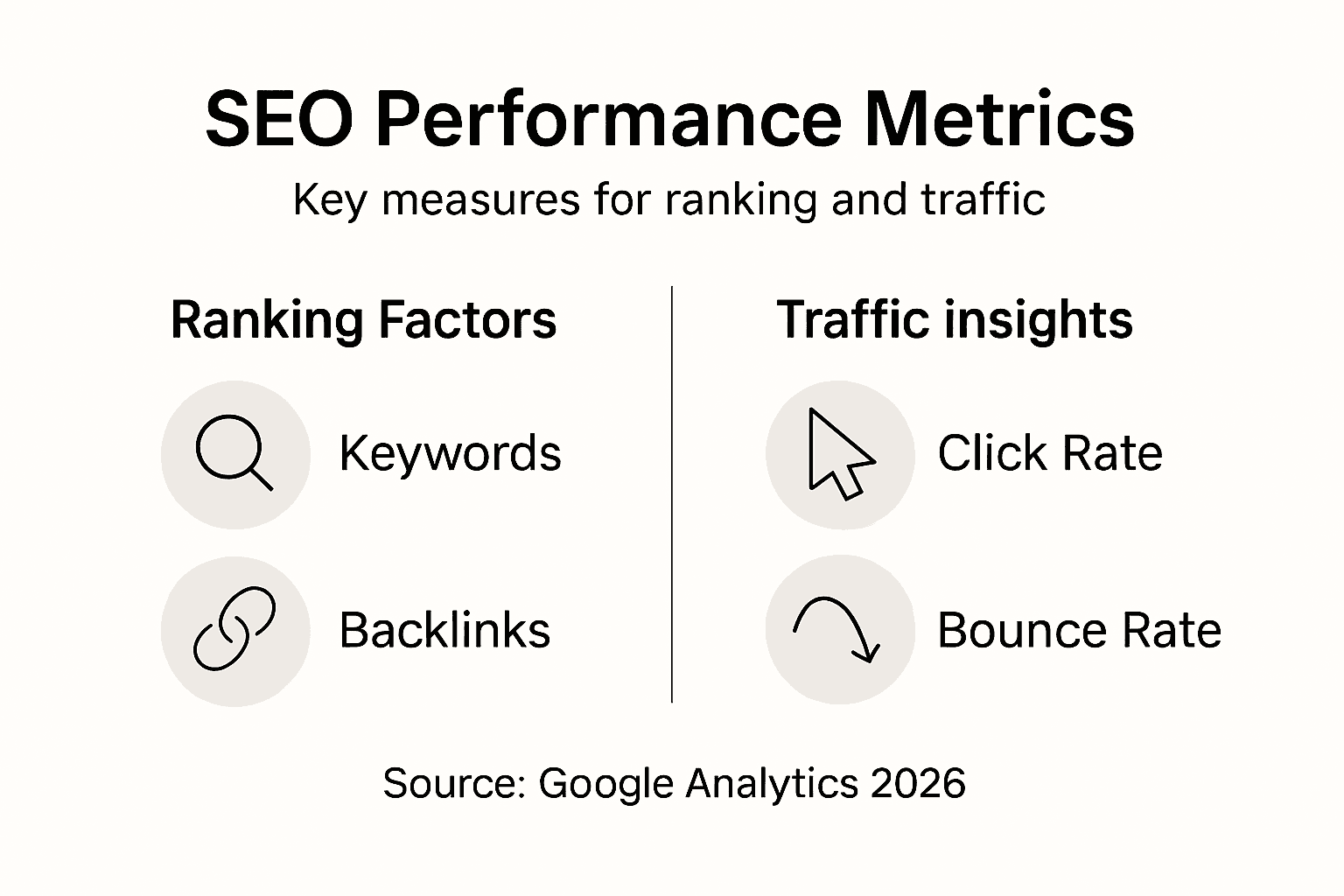
Compare types of SEO data points and their business value:
| SEO Metric | Why It Matters | Typical Tool |
|---|---|---|
| Click-through Rate | Reveals content appeal | Google Search Console |
| Organic Traffic | Measures search visibility | Google Analytics |
| Keyword Ranking | Tracks keyword success | Ahrefs, SEMrush |
| Backlink Profile | Assesses site authority | Moz, Majestic |
| Bounce Rate | Shows user engagement | Google Analytics |
Develop an iterative optimization approach where you continuously test, measure, and refine your SEO strategies. Be prepared to adapt quickly to changing search algorithms and emerging digital marketing trends.
Pro tip: Schedule monthly performance reviews and quarterly comprehensive SEO audits to maintain a proactive and responsive optimization strategy.
Here’s a summary of how each SEO step impacts your website:
| Step | Main Focus | Primary Benefit | Review Frequency |
|---|---|---|---|
| Assess Readiness | Technical & content audit | Smooth site operation | Quarterly |
| Keyword Research | Targeted keyword selection | Matches user intent & increases reach | Quarterly |
| Optimize Structure | Site maps & content tuning | Better navigation & rankings | Every 6 months |
| Build Backlinks | Earning quality links | Boosts authority & trust | Monthly |
| Analyze & Refine | Data-driven improvements | Ongoing performance growth | Monthly & quarterly |
Elevate Your SEO Strategy with Expert Support from Markety
The challenge of boosting your website rankings and increasing traffic demands more than just basic tweaks. As the article highlights, assessing site readiness, optimizing content, conducting thorough keyword research, and building authoritative backlinks are essential steps that require ongoing attention and expertise. Without a clear strategy and professional guidance, it is easy to feel overwhelmed by the technical details and evolving search engine algorithms.
At Markety, we understand these pain points and offer tailored SEO solutions designed to drive real results. From strategic keyword research that targets your ideal customers to comprehensive website optimization, our affordable packages empower you to transform your online presence. We provide continuous support and actionable insights that align perfectly with the proven steps for SEO success in 2026.
Take the first step today toward mastering your SEO with Markety’s expert digital marketing services. Visit Markety.co.il now to discover how we can help you enhance your search visibility, increase traffic, and convert visitors into loyal customers. Don’t let your competitors take the lead—start optimizing your site the right way with help you can trust.
Frequently Asked Questions
How can I assess my website’s readiness for SEO in 2026?
To assess your website’s readiness for SEO, conduct a comprehensive audit that evaluates technical performance, mobile responsiveness, site architecture, and content quality. Use this information to prioritize improvements that can be implemented within 30 days to enhance your search engine compatibility and overall performance.
What steps should I take to identify the right keywords for my content?
Start by researching keywords that align with your target audience’s search behaviors. Focus on long-tail keywords, industry-specific terminology, and location-based phrases to develop a diverse list. Aim to finalize your keyword strategy within 60 days, ensuring it reflects current trends and user intent.
How do I optimize my site’s structure for better search rankings in 2026?
To optimize your site structure, ensure a clear hierarchy with intuitive navigation, clean URLs, and effective internal linking. Regularly review your site’s organization and make adjustments every six months to keep it user-friendly and aligned with SEO best practices.
What are the best practices for building high-quality backlinks?
Focus on creating original content that naturally attracts links and consider guest posting on reputable related websites. Develop relationships with industry influencers to earn organic links, and monitor your backlink profile monthly to maintain a healthy link strategy.
How can I analyze my SEO performance to improve rankings?
Conduct a thorough analysis of SEO metrics such as keyword rankings, organic traffic, and bounce rates. Use data-driven insights to make adjustments to your strategy, and aim to review your performance monthly while completing a full SEO audit quarterly for ongoing growth.
What should I do to refine my SEO strategies for continuous improvement?
Regularly analyze key performance indicators to identify strengths and weaknesses in your SEO strategy. Adjust your approach based on data insights, and implement changes iteratively, aiming for monthly performance reviews and quarterly comprehensive audits to maximize your website’s potential.
Recommended
- Blog – קידום אתרים שיווק באינטרנט ואיחסון אתרים – Markety
- 10 Search engine optimization (SEO) A Beginner’s Guide To Search Engine Optimization – קידום אתרים שיווק באינטרנט ואיחסון אתרים – Markety
- 05 SEO Tips SEO – קידום אתרים שיווק באינטרנט ואיחסון אתרים – Markety
- 5 Tips How to get maximum success in SEO – קידום אתרים שיווק באינטרנט ואיחסון אתרים – Markety