
A frustrating website can cost you valuable leads before your business even gets a chance to make an impression. As more Canadian and American customers start their journey online, modern web design becomes more than just how your site looks. It is a practical tool that shapes engagement and drives real results. By focusing on strategic visual communication and user-centered design, affordable solutions can turn any website into a reliable asset for marketing and lead generation.role of web design in marketing
Table of Contents
- Defining Web Design Within Modern Marketing
- Key Web Design Elements For Small Business Growth
- Web Design’s Impact On Branding And Trust
- How Web Design Drives SEO And Visibility
- Conversion Optimization Through Web Design
- Common Web Design Mistakes To Avoid
Key Takeaways
| Point | Details |
|---|---|
| Web Design as a Strategic Investment | Modern web design is essential for businesses, directly impacting marketing success and customer engagement. |
| Importance of User Experience | Key design elements like responsive layouts and intuitive navigation are critical for enhancing user experience and increasing conversions. |
| Building Trust Through Design | A professional website fosters customer trust by aligning design with branding and ensuring transparency in communication. |
| SEO Integration in Design | Effective web design is integral to search engine optimization, with user-centric elements improving a site’s visibility and performance. |
Defining web design within modern marketing
Web design has transformed from a purely aesthetic discipline into a strategic marketing powerhouse that directly influences business performance and customer engagement. In the digital landscape, a website serves as a company’s primary digital storefront, making its design far more than just visual appeal – it’s a critical communication tool that bridges brand messaging with user experience.
Modern web design integrates multiple technical and strategic elements to create compelling digital experiences. HTML5 and CSS3 technologies now enable businesses to craft responsive, accessible interfaces that adapt seamlessly across devices. This technological foundation allows marketers to develop websites that not only look professional but also function strategically to capture and retain audience attention.
Key components of contemporary web design for marketing success include:
- Responsive Layout: Ensures consistent user experience across smartphones, tablets, and desktop computers
- User-Centered Navigation: Intuitive menu structures that guide visitors toward conversion goals
- Visual Hierarchy: Strategic placement of elements to direct user attention and highlight critical information
- Performance Optimization: Fast-loading pages that reduce bounce rates and improve search engine rankings
- Brand Consistency: Design elements that reinforce brand identity and messaging
Effective web design goes beyond aesthetics by creating purposeful digital experiences that align with specific marketing objectives. The design must communicate brand values, facilitate user interactions, and ultimately drive conversions through thoughtful, strategic visual communication.
Here’s how key web design elements impact different business objectives:
| Design Element | Business Objective | Primary Impact |
|---|---|---|
| Responsive Layout | User Engagement | Increases time on site |
| Clear Value Proposition | Lead Generation | Boosts inquiry form clicks |
| Strategic CTA Placement | Conversion Rate | Improves sales or signups |
| Consistent Branding | Brand Trust | Builds credibility quickly |
| Fast Loading Speed | SEO Visibility | Lowers bounce rates |
Pro tip: Regularly audit your website’s design performance using analytics to identify user experience bottlenecks and continuously optimize your digital marketing interface.
Key web design elements for small business growth
Small businesses must recognize web design as a critical strategic investment that directly impacts marketing success and customer acquisition. Unlike large corporations with extensive marketing budgets, small businesses need to maximize every digital interaction through thoughtful, purposeful website design that communicates value and builds trust instantly.

Critical web design elements for small business growth include strategic components that transform websites from simple online brochures into powerful marketing platforms. Website navigation tips play a crucial role in guiding potential customers through the buyer’s journey, ensuring they can easily find information and take desired actions.
Key design elements that drive small business growth encompass:
- Clear Value Proposition: Immediately communicate unique business benefits within the first screen view
- Mobile Responsiveness: Ensure seamless experience across all device types and screen sizes
- Strategic Call-to-Action (CTA) Placement: Prominently display conversion-focused buttons
- Professional Visual Branding: Use consistent color schemes, typography, and imagery
- Fast Loading Speed: Optimize performance to reduce bounce rates and improve user experience
Effective web design for small businesses requires a holistic approach that balances aesthetic appeal with functional performance. Every design element should serve a specific marketing goal, whether that’s generating leads, building credibility, or directly facilitating sales conversions.
Small businesses can compete with larger competitors by creating websites that are strategically designed to convert visitors into customers.
Pro tip: Conduct quarterly website performance audits to identify design elements that are driving or hindering your conversion rates, and continuously refine your digital marketing interface.
Web design’s impact on branding and trust
Branding goes far beyond logos and color palettes. In the digital age, a website serves as the primary touchpoint for building customer trust and communicating a company’s core values. Website design features significantly influence how potential customers perceive a business’s professionalism and reliability.
Trust is a nuanced digital currency that requires strategic design elements to cultivate. Professional websites demonstrate credibility through intentional visual communication, creating an immediate psychological connection with visitors. The visual narrative communicated through design elements like typography, color psychology, and layout directly impacts a user’s willingness to engage and convert.
Key trust-building design components include:
- Consistent Visual Identity: Align design elements with brand messaging
- Clean, Professional Layout: Minimize visual clutter and maximize readability
- High-Quality Imagery: Use authentic, professional visuals that represent your brand
- Transparent Contact Information: Display clear communication channels
- Security Indicators: Showcase trust seals, SSL certificates, and privacy guarantees
Psychological research demonstrates that users form initial impressions within milliseconds of landing on a website. Digital interaction trust elements like site clarity, intuitive navigation, and professional aesthetics directly impact user perception and behavioral intentions.
A well-designed website is not just an online presence – it’s a digital handshake that builds immediate credibility.
Pro tip: Conduct user testing and gather feedback to continuously refine your website’s trust-building design elements, ensuring your digital first impression remains compelling and professional.
How web design drives SEO and visibility
Search engine optimization is no longer a standalone technical strategy but an integral component of holistic web design. SEO practices integrated with user experience create powerful synergies that dramatically improve a website’s digital performance and search rankings.
Modern search algorithms prioritize websites that deliver exceptional user experiences. This means design elements like page load speed, mobile responsiveness, intuitive navigation, and content readability directly impact a site’s search engine visibility. Professional web design transforms technical optimization from a checklist into a strategic approach that naturally attracts organic traffic.
Critical SEO-driven design components include:
- Mobile-First Responsive Design: Ensure seamless experience across all devices
- Optimized Page Load Speed: Minimize loading times and reduce bounce rates
- Clean, Semantic HTML Structure: Create search-engine-friendly content architecture
- Strategic Content Hierarchy: Use headings and formatting to improve readability
- Secure HTTPS Connection: Implement SSL certificates for improved trust signals
The relationship between design and search performance is symbiotic. Digital marketing strategies recognize that technical optimization, content quality, and user experience are interconnected elements that collectively determine online visibility.
Search engines reward websites that prioritize user experience and provide genuine value.
Pro tip: Conduct monthly technical SEO audits to identify and resolve design-related performance issues, ensuring your website remains optimized for both users and search algorithms.
Conversion optimization through web design
Conversion optimization is a strategic process that transforms website visitors into valuable customers through intentional design choices. Web design elements significantly influence user behavior and decision-making processes, making design a critical lever for marketing success.
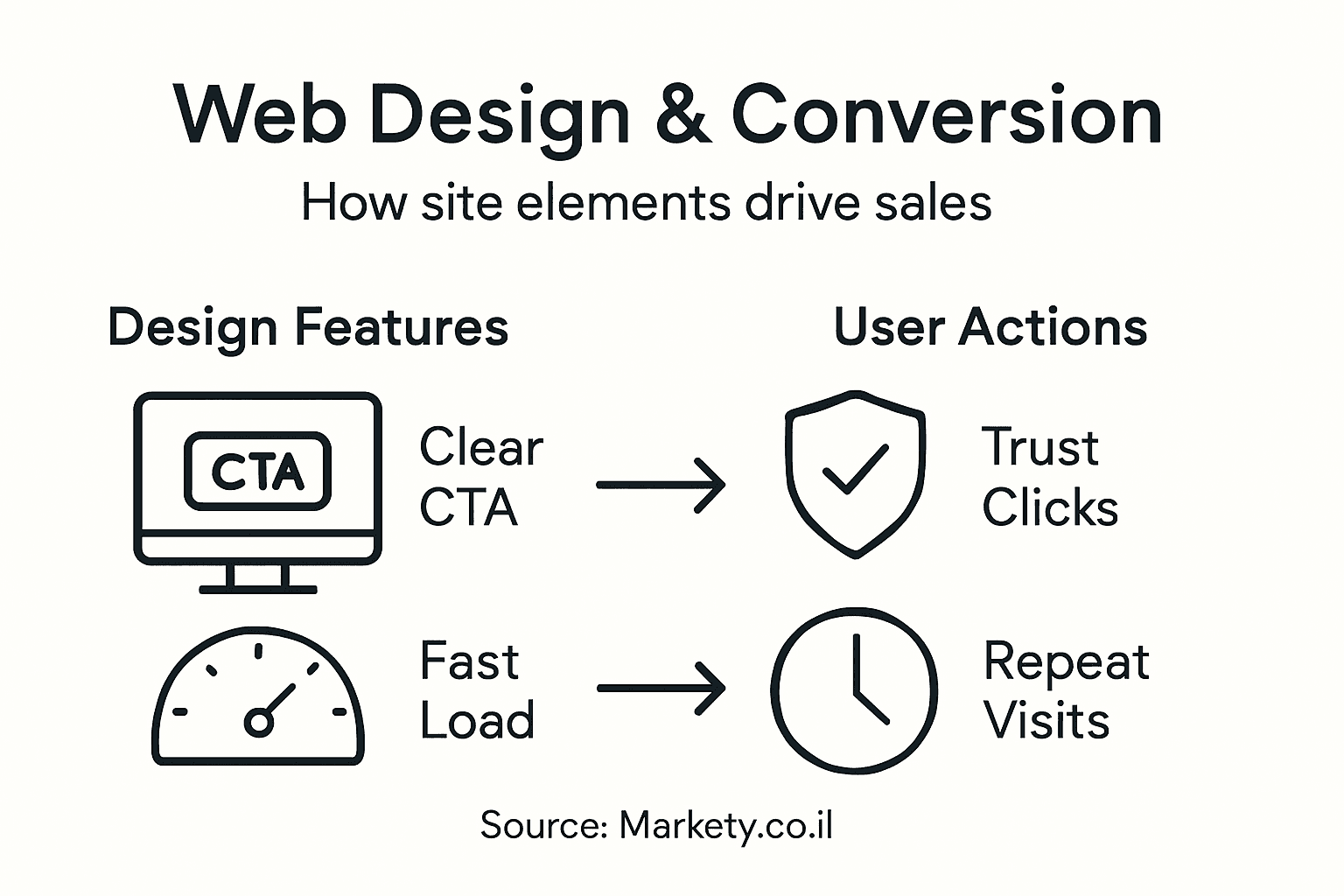
Successful conversion design goes beyond aesthetic appeal, focusing on creating intuitive pathways that guide users toward desired actions. Every visual element, from color psychology to strategic button placement, plays a crucial role in reducing friction and increasing the likelihood of user engagement and purchase completion.
Key conversion-driving design components include:
- Clear Value Proposition: Communicate unique benefits within the first screen view
- Strategic Call-to-Action (CTA) Placement: Position conversion buttons prominently and logically
- Simplified Navigation: Create intuitive user journeys with minimal complexity
- Visual Hierarchy: Direct user attention toward critical conversion elements
- Trust Indicators: Display security badges, testimonials, and social proof
Design elements must dynamically adapt to different user demographics and device types, recognizing that conversion strategies are not one-size-fits-all. Successful websites continuously test and refine their design to optimize conversion potential.
Effective web design transforms visitors from passive observers into active participants.
Pro tip: Implement A/B testing for design elements to systematically identify which visual configurations most effectively drive user conversions.
Common web design mistakes to avoid
Web design mistakes can dramatically undermine a business’s digital presence, turning potential customers away before they even understand the value proposition. Common web design errors represent significant barriers to user engagement and conversion, making it critical for businesses to understand and proactively address these pitfalls.
Successful websites require a strategic approach that prioritizes user experience and functionality over purely aesthetic considerations. Many businesses inadvertently create digital experiences that frustrate users, reduce credibility, and ultimately harm marketing performance by neglecting fundamental design principles and user-centric strategies.
Key web design mistakes to avoid include:
- Ignoring Mobile Responsiveness: Failing to create adaptive designs for different device types
- Overcomplicated Navigation: Creating complex, confusing user journeys
- Slow Page Loading: Allowing extended load times that increase bounce rates
- Inconsistent Branding: Using conflicting visual elements across website pages
- Poor Accessibility: Neglecting design elements that support users with disabilities
- Cluttered Visual Design: Overwhelming users with too much information
- Ineffective Call-to-Action Placement: Hiding or poorly positioning conversion buttons
Technical design choices have profound psychological impacts on user perception and behavior. Typical web design errors can transform a potentially engaging website into a user-repelling digital experience that undermines marketing objectives.
The following table summarizes common web design mistakes and their negative consequences:
| Mistake | Negative Impact | Example Scenario |
|---|---|---|
| Ignoring Mobile Responsiveness | Lost mobile visitors | Site unreadable on phones |
| Overcomplicated Navigation | High drop-off rates | Users give up searching |
| Slow Page Loading | Lower rankings | Pages abandon before loading |
| Inconsistent Branding | Damaged credibility | Mismatched colors, fonts |
| Poor Accessibility | Excludes some users | Lack of alt text for images |
Great web design is invisible – users should never notice the design, only the experience.
Pro tip: Conduct quarterly comprehensive website audits using both automated tools and real user testing to identify and systematically eliminate design friction points.
Unlock Marketing Success with Strategic Web Design Solutions
The article highlights how critical web design is for marketing success especially for small to medium-sized businesses that face challenges like capturing audience attention, building trust, and driving conversions. If your goal is to create a professional, responsive website that communicates your brand’s value clearly and improves user experience you need tailored web development combined with proven digital marketing strategies. Key pain points include mobile responsiveness, intuitive navigation, fast page loading, and trust-building designs – all vital to stand out and generate leads effectively.
At Markety.co.il we specialize in transforming your website into a powerful marketing platform that addresses these exact challenges. We deliver customized solutions that integrate content marketing, SEO, and website optimization to increase visibility and convert visitors into loyal customers. Whether you want to improve your site’s loading speed, refine your visual identity, or implement strategic call-to-actions we offer affordable packages designed for growth.
Ready to elevate your online presence and maximize your marketing ROI with expert web design and promotion?
Explore our comprehensive website development and promotion services and discover how we can help your business unlock its full potential today. Visit Markety.co.il and take the first step toward a standout website built for success.
Frequently Asked Questions
What is the role of web design in marketing?
Web design plays a crucial role in marketing by serving as a digital storefront that shapes customer perceptions, influences user engagement, and drives conversions through strategic design elements.
How does responsive design impact user experience and engagement?
Responsive design ensures that websites function smoothly across devices, providing a consistent user experience that keeps visitors engaged and reduces bounce rates.
What are critical web design elements that can enhance conversion rates?
Key design elements that boost conversion rates include clear value propositions, strategic call-to-action placement, intuitive navigation, and visually appealing layouts that guide users towards desired actions.
Why is website performance optimization important for marketing success?
Website performance optimization is vital as fast-loading pages improve user experience and search engine rankings, leading to higher visibility and increased traffic, which ultimately contributes to better marketing outcomes.
Recommended
- Web Design – קידום אתרים שיווק באינטרנט ואיחסון אתרים – Markety
- Content marketing benefits Is Content Marketing Worth Your Attention? 4 Amazing Benefits – קידום אתרים שיווק באינטרנט ואיחסון אתרים – Markety
- Responsive – קידום אתרים שיווק באינטרנט ואיחסון אתרים – Markety
- Social Media Marketing – קידום אתרים שיווק באינטרנט ואיחסון אתרים – Markety